

Two advanced treatments for skin tone, pigment and radiance
As fall approaches and UV radiation wanes, demand for treatments that target uneven skin tone, pigmentation and overall skin renewal increases. Two of the most powerful professional treatments on the market are BioRePeelCl³ FND and Cosmelan. Although both improve skin tone and clarity, they work by completely different mechanisms and are suitable for different types of pigmentation and skin conditions. In this in-depth comparison, we analyze the differences between the treatments from a clinical perspective and which patients are best suited for each method.
What is BioRePeelCl³ FND?
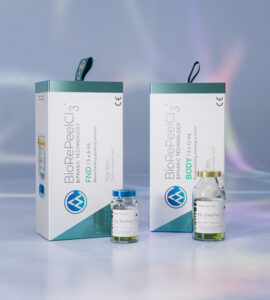
BioRePeelCl³ FND is an innovative biphasic chemical peel based on 35% trichloroacetic acid (TCA) combined with several complementary acids such as salicylic, tartaric, citric and lactobionic. The formula is designed to provide powerful exfoliation without the classic flaking usually associated with TCA treatments. This makes BioRePeel unique in its kind.
The peel consists of two phases: a hydrophilic phase that exfoliates and stimulates cell renewal, and a lipophilic phase that protects the skin barrier, reduces irritation and provides a smoother treatment experience. In addition to the acids, the formulation also contains amino acids, vitamins (C and B2) and GABA, providing a combination of exfoliating, antioxidant and biostimulating effects.
The treatment is virtually painless and has minimal downtime. Skin is instantly brighter, more even-toned and pores are reduced. Since BioRePeel does not increase the skin’s photosensitivity, it can be performed year-round, which is a great advantage for both clinicians and patients.
What is Cosmelan?
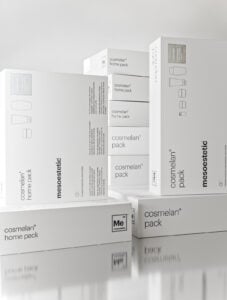
Cosmelan is a globally recognized medical depigmentation system developed to treat hyperpigmentation at both the epidermal and dermal level. It is particularly effective in melasma, hormonal pigmentation, sun damage, post-inflammatory hyperpigmentation (PIH) and uneven skin tone.
Unlike a chemical peel, Cosmelan is not an exfoliating treatment in the first place, but works biochemically by blocking tyrosinase – the enzyme that regulates melanin production. By normalizing melanin activity, existing pigment spots are corrected while preventing their reappearance.
Cosmelan consists of two steps:
- a professional mask applied in the clinic
- a home protocol lasting several months
Together, these two steps provide controlled, deep and long-lasting depigmentation. The effects are visible early on but continue to improve over time.
Mechanisms of action – exfoliation vs enzymatic regulation
BioRePeel and Cosmelan are both effective against pigmentation, but in completely different ways.
BioRePeel works through chemical exfoliation and accelerated cell renewal. By removing dead skin cells and stimulating dermal processes, superficial pigmentation is reduced and skin tone becomes clearer. The biostimulating components also improve skin texture, making BioRePeel a versatile treatment for both texture and tone.
Cosmelan, on the other hand, goes deeper by affecting the very cause of pigmentation: melanin production. By controlling tyrosinase activity, uneven pigmentation as a result of hormonal factors, sun damage or inflammation is reduced. As a result, Cosmelan offers longer-lasting results – especially for melasma or complex pigmentation that does not respond to simpler treatments.
While BioRePeel improves skin from the inside out through cell renewal, Cosmelan works more like a “pigment switch” that regulates the entire melanogenesis process.
Indications – which treatment fits which patient?
BioRePeel is ideal for patients looking to improve overall skin quality, including radiance, pore size, fine lines and mild to moderate pigmentation. The treatment is ideal for people with gray, lifeless skin after summer or patients who want a quick refresh. It is also suitable for more sensitive skin types and darker skin tones as the risk of post-inflammatory hyperpigmentation is low.
Cosmelan is the best choice for patients with severe hyperpigmentation, especially melasma, sun spots or post-inflammatory pigmentation. The treatment is powerful and requires commitment to the home protocol, but in return gives very long-lasting and clear results. Cosmelan is particularly effective for patients who have not previously had satisfactory results from simpler peels or acids.
Downtime and expected recovery
BioRePeel has minimal downtime. Some people experience slight tightness or dullness the next day, but no visible flaking. This makes it suitable for patients who want to continue their daily lives without impact.
Cosmelan, on the other hand, has a more noticeable recovery. Redness, slight flaking and dryness are common in the first few weeks as pigment is rejected and skin turnover increases. The home products are a key part of the process and require subsequent skin care as instructed.
Cosmelan involves more aftercare but also provides longer lasting control of pigmentation.
Results – when is the effect visible?
BioRePeel provides instant radiance and skin tone is evened out after the first treatment. After a course of treatment, there are clear improvements in pore size, skin texture and overall clarity.
Cosmelan shows visible improvements within a few weeks, but the biggest changes occur over time. After 8-12 weeks, marked reduction in pigmentation and a more balanced skin tone are seen. The results are long-lasting, provided the patient follows the recommended aftercare program.
What treatment should the clinic recommend?
The choice depends entirely on the type of pigment and the condition of the skin.
BioRePeel is the right choice for patients who want to improve skin tone and texture quickly, without downtime, and who have milder pigmentation.
Cosmelan, on the other hand, is superior for patients with melasma, deep pigmentation and recurrent spots.
For many patients, a combination may be optimal: BioRePeel to start improving skin surface and radiance, and Cosmelan to remove deeper pigments over time.
Frequently Asked Questions
BioRePeel is a biphasic chemical peel containing 35% TCA and biostimulatory ingredients, designed to renew the skin’s surface, improve texture, and add radiance with minimal flaking. Cosmelan is a medical depigmentation system that targets melanin production at the cellular level, primarily used for melasma and persistent hyperpigmentation. BioRePeel improves overall skin quality; Cosmelan specifically corrects pigmentation.
Cosmelan is significantly more effective for melasma because it inhibits tyrosinase, the enzyme that controls melanin production. BioRePeel can improve mild surface pigmentation but is not designed to address the deeper, hormonal, or recurring pigmentation that defines melasma.
BioRePeel has minimal downtime. Patients may experience slight redness or tightness after treatment, but the skin does not visibly flake. Cosmelan involves a more noticeable recovery phase in which the skin can be red, dry, and mildly flaky during the first two to three weeks, followed by a structured home programme lasting several months.
Yes, in a sequenced treatment plan. Many clinics use BioRePeel first to renew the surface and prepare the skin barrier, then introduce Cosmelan to target underlying pigmentation. The two should not be applied in the same session, and proper recovery time between treatments is essential.
BioRePeel produces visible improvements after the first treatment, with noticeable radiance and a more even texture within a few days. Cosmelan delivers gradual but more dramatic pigment reduction, with the clearest results typically visible after six to twelve weeks of consistent aftercare.